


Developing the people and ideas that will drive healthcare innovation
Catalyst projects involve Fellows and their international teams of collaborators. They focus on identifying unmet medical needs that can be addressed by new biomedical technologies, and launching projects to develop them.
Catalyst projects are shaped by the MIT linQ Innovation Method. This unique method accelerates and heightens the potential for innovation impact by—
- Helping teams to identify and precisely define medical needs
- Compressing development time by engaging diverse lifecycle expertise (such as businesspeople, healthcare professionals, and public leaders as well as academic researchers)
- Encouraging strategic decisions about actions and resources
- Enabling project teams to become agents of change
Two phases to accelerate innovation
The full program comprises two phases, with a new cohort recruited annually to begin Phase 1.
Phase 1: Discover new project opportunities (6 months)
With guidance from a diverse team of mentors, a cohort of Fellows work together to and validate unmet needs, generate solution ideas matched to those needs, and outline a plan to develop and deploy their solution. The deliverable for Phase 1 is a portfolio of project proposals.
Phase 2: Project execution (~1-3 years)
Phase 2 focuses on starting and de-risking projects to bring the innovation opportunity from an idea to implementation and impact.
Phase 2 projects

Obstructive Sleep Apnea (OSA)

Barrier

Hydration

Automatic Inactivation of Unused Opioids

Left Thumb Pain in Gastroenterologists Performing Endoscopy

Digital Imagery Rehearsal Therapy for PTSD Patients

Automated Detection of Thought Disorder

Objective Data to Guide Treatment of Sleep Disturbance in PTSD

Pressure Injury Prevention through Continuous Microclimate Monitoring in Spinal Injury Patients
Graduated projects
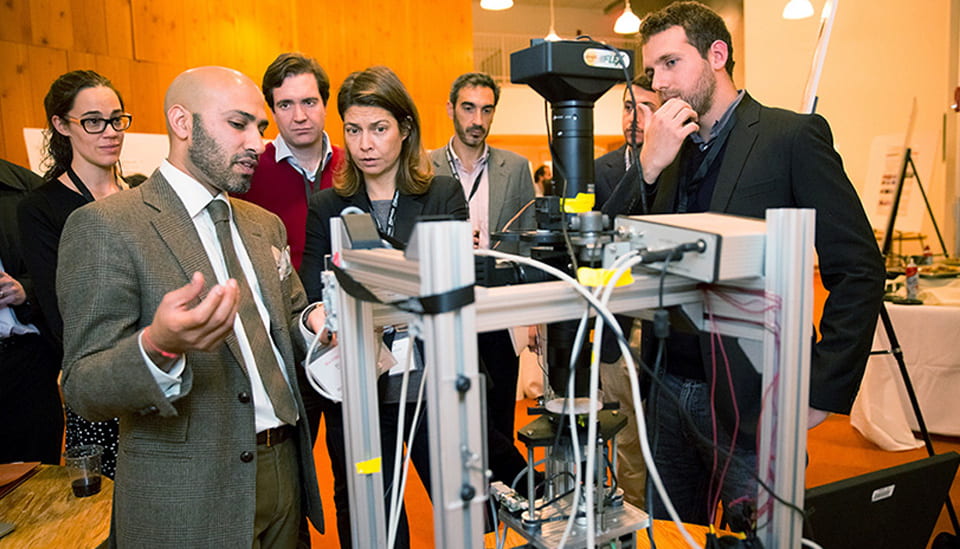
Early intervention
Projects that can enable earlier, better responses to disease and injury
Reinventing cytometry by providing a means for high-throughput analysis of a blood sample in a monolayer preparation, thereby enabling the identification of rare cells for cancer and other applications. Licensed by Cytognos
Improving colonoscopy lesion detection to reduce colorectal cancer mortality by providing enhanced visualization of difficult-to-see lesions. Transitioned to become a research program at JHU
Detecting an insufficient nutrient transport in the placenta that may put a fetus at risk and indicate the need for early delivery. Transitioned to become a research program at BCH and MIT
A new technology to detect early signs of Parkinson’s disease via native finger interaction with electronic devices during routine use. Licensed by startup nQ Medical
A new technology to help primary care physicians to quickly identify potentially malignant skin lesions. Transitioned to startup Piction Health

Managing health
Projects that can help people achieve and maintain better health
Developing imaging biomarkers that help distinguish bipolar disorder from major depressive disorder.
Improving access to eyeglass prescriptions with a new hand-held autorefractor suitable for field use and enabled by advanced optics and analytics. Licensed to startup PlenOptika
Non-invasive screening for dangerously-low white cell counts to provide a first-line indicator of infection and risk of infection, in particular during cycles of chemotherapy. Licensed to startup Leuko
A new wearable technology to provide positional feedback to scoliosis patients to help them control their spinal alignment and reduce their risk of progression and need for more traumatic therapies. Transitioned to AsanawearTech
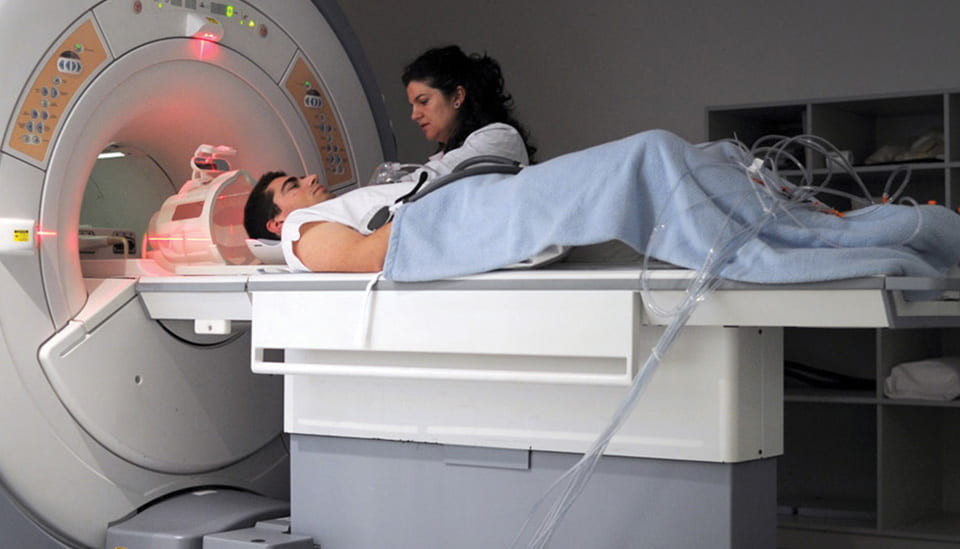
Better care delivery
Projects that can make clinical care safer and more effective
Marker for cardiac risk following suspected pulmonary embolism derived from automated analysis of computed tomography (CT) images. Licensed by imbio
Non-invasive method to detect meningitis in infants, thereby avoiding the need for lumbar puncture. Licensed by startup Kriba
Enabling simultaneous imaging of multiple PET radiotracers to improve oncologic, neurologic, and cardiac disease management.
Hardware and software innovations to provide personalized MRI to enable enhanced resolution for earlier detection of multiple sclerosis and safe imaging protocols for patients with implanted electrodes.
Monitoring the efficacy of chemotherapy through imaging markers that target the initial stages in tumor cell death, particularly in cancers like melanoma where tumors develop a resistance to therapy.
Developing novel MRI approaches to measure tissue fibrosis in patients with pancreatic cancer as an indicator of therapeutic efficacy.