

About Catalyst

A method to increase research’s impact on health

Catalyst is built on a principled methodology for needs identification and opportunity development, and an organizational model that fosters a vibrant multi-stakeholder community. The Catalyst mission is to increase the potential impact of biomedical research and improve the likelihood that newly developed solutions will address unmet health care needs.

MIT linQ developed the Catalyst methodology to challenge the generally accepted research paradigm in academia by shifting the focus to a clinical needs-driven approach, rather than pushing an existing line of work driven by a need to secure funds, to publish or other objectives different than creating valuable products. The Catalyst model also departs from the classic approach by bringing together multiple disciplines and professions at the outset, so that the work isn’t constrained by the expertise and work of a single lab or institution.

The process

Proof of need

Identify and evaluate relevant unmet medical needs by visiting laboratories, talking with clinicians, and exploring the literature.

Proof of opportunity

Identify and evaluate a set of possible solutions. Meet with key stakeholders to assess their potential of solving the unmet need.

Project proposal

Develop a research project plan with milestones over a 12-18 month time frame.

Outcome

Portfolio of validated research projects for ongoing mentorship, with real opportunity to transition to the project execution phase, project execution—exploration of funding and commercialization opportunities.

“linQ brings together many passionate, creative and brilliant people. Real things happen, and we have great fun along the way.”

Peter Bryant, linQ faculty and Professor of Entrepreneurship at IE, Madrid

Catalyst roles

Fellows: Clinicians (MD, RN, PA, etc. etc.), researchers (science, engineering, etc.), designers, businesspeople (MBAs, entrepreneurs, commercial scientists, marketing, etc.). Participants can be students, postgraduates, and early professionals.

Program Faculty: Experienced professionals from participating hubs dedicated to delivering content from their expertise and mentorship in biomedical research and innovation.

Independent Advisory Panel (IAP): Experienced professionals in healthcare, science, technology, leadership, and innovation who provide external perspectives and valuable feedback.

Career impact
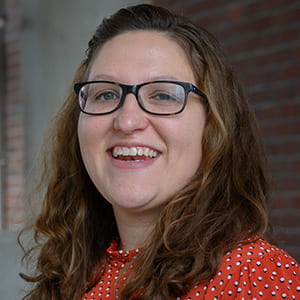
“In healthcare we’re all trained to assess and measure very specific criteria according to our individual disciplines…in Catalyst it was fun to look at problems in a different way.”
Chelsey Solar, 2020 Fellow,
Medical Informatics Fellow at VA Boston Healthcare System
“If you have good technical skills, in Catalyst you will learn everything else you need to succeed in any biomedical project or start-up, such as idea creation, networking, and giving an effective pitch. Catalyst will give you the right environment to boost your career. It did that for me.”
oaquin López Herraiz, 2011 Fellow,
Associate Professor, Nuclear Physics Group and IPARCOS, Complutense University of Madrid
“The experience, the process, the collaboration, the mentorship, the network, all showed me what it takes to comprehensively assess and execute on an idea in order to create an impactful product and business.”
Jason Tucker-Schwartz, 2014 Fellow,
Director of Marketing and Business Development, SpectraWAVE

In their own words

Catalyst Fellows describe their experience and outcomes in this prior Information Session.

Also: Fellows Ravi Rasalingam and Lola Baird share their stories from the Catalyst Fellowship

Catalyst Fellows, mentors, and program leaders explain the Catalyst innovation method and the impact it has on emerging biomedical technology leaders.


Key performance results

The methodology works: Catalyst projects advance to development and attract outside funding at rates well above the MIT benchmark.

0%
of projects advance
to commercial development —
3× the MIT benchmark
MIT Catalyst projects
MIT average

Our network

Collaborations

The Catalyst program is integrated within the MIT and other private, public, and university innovation ecosystems and leverages their internal mechanisms to support research.
MIT Institute of Medical Engineering and Science (MIT IMES) logoHood Pediatric Hub at MIT logo

Champions

Champions provide financial and intellectual support to for a specific edition of Catalyst. Selected individuals from Champion organizations may meet with Fellows and project teams, offer comments and subject matter expertise on innovation priorities, and observe and learn about the Catalyst method. Current and former Champions include:
Public agencies and foundations

Agencies and foundations who promote new paradigms for research and innovation have funded editions of Catalyst including:


US Department of Veterans Affairs logo

Catalyst community

Catalyst Faculty, Fellows, and Advisors hail from many different institutions and sectors providing the capacity to tap into a deep, diverse, and dynamic network. See who on our people page.


Catalyst projects

Catalyst projects involve Fellows and their international teams of collaborators. They focus on identifying unmet medical needs that can be addressed by new biomedical technologies. Successful Catalyst projects demonstrate a real potential for healthcare impact.

See the Fellows’ projects
As an engineer, you have honed your problem-solving skills and have a deep understanding of technology. The biomedical field is ripe with opportunities for individuals like yourself to apply your expertise and make a profound impact on the lives of patients and providers. The Catalyst Program offers an exceptional platform to harness your talents and channel them towards addressing the most pressing challenges in healthcare today.